
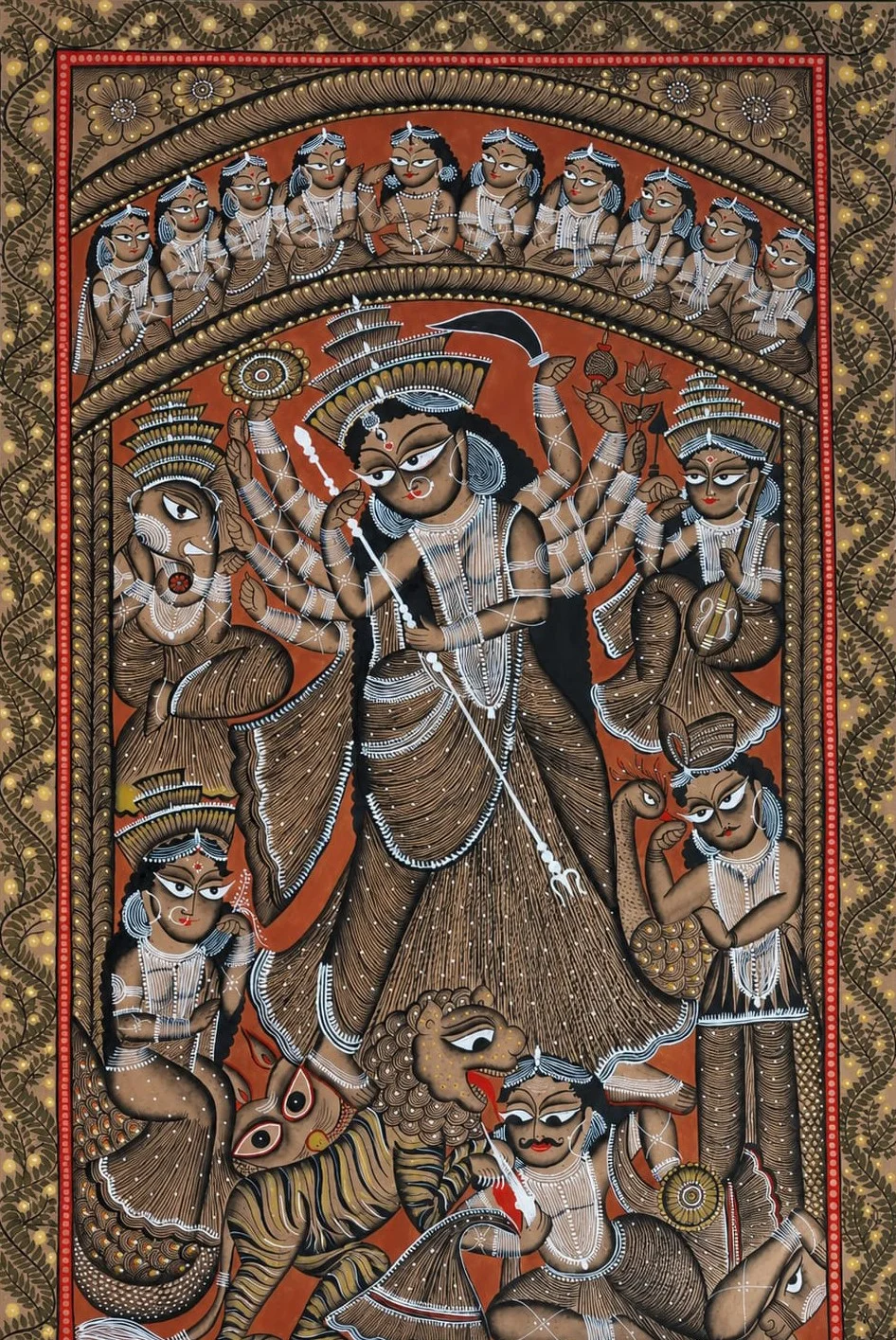
In the nineteenth century, pilgrims visiting the Kali temple at Kalighat in Kolkata could take home a small painted souvenir: a goddess, a scene from the Ramayana, or a witty sketch of city life. Painted quickly and confidently by scroll painters known as patuas, these works became known as Kalighat paintings or Kalighat Pattachitra – and today they are celebrated as one of the most modern-looking of all traditional Indian art forms.
From village scrolls to city bazaar
The patuas of rural Bengal had long painted narrative scrolls (pata or pat) that they unrolled while singing stories. When many moved to Kolkata in the 1800s, they adapted to a fast-growing urban market. They switched to single sheets of mill-made paper, water-based colours and a simplified style that could be produced quickly – without losing the energy of the line. You can read more about Kalighat painting on Wikipedia.
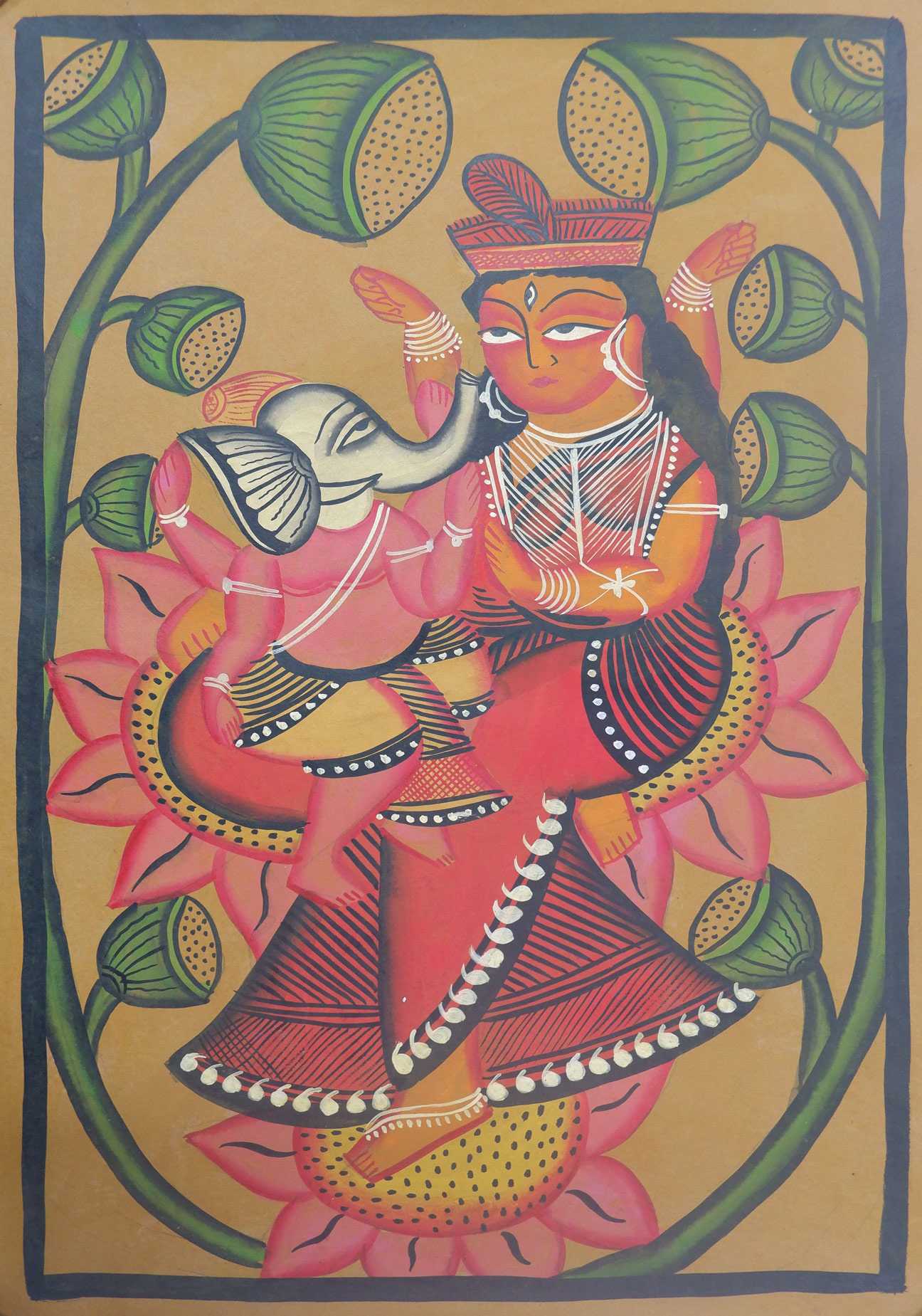
The Kalighat style
- Sweeping, rhythmic outlines drawn in a single confident movement of the brush.
- Rounded, volumetric figures created with simple shading along the edges of limbs and bodies.
- Plain backgrounds that make the figures stand out boldly.
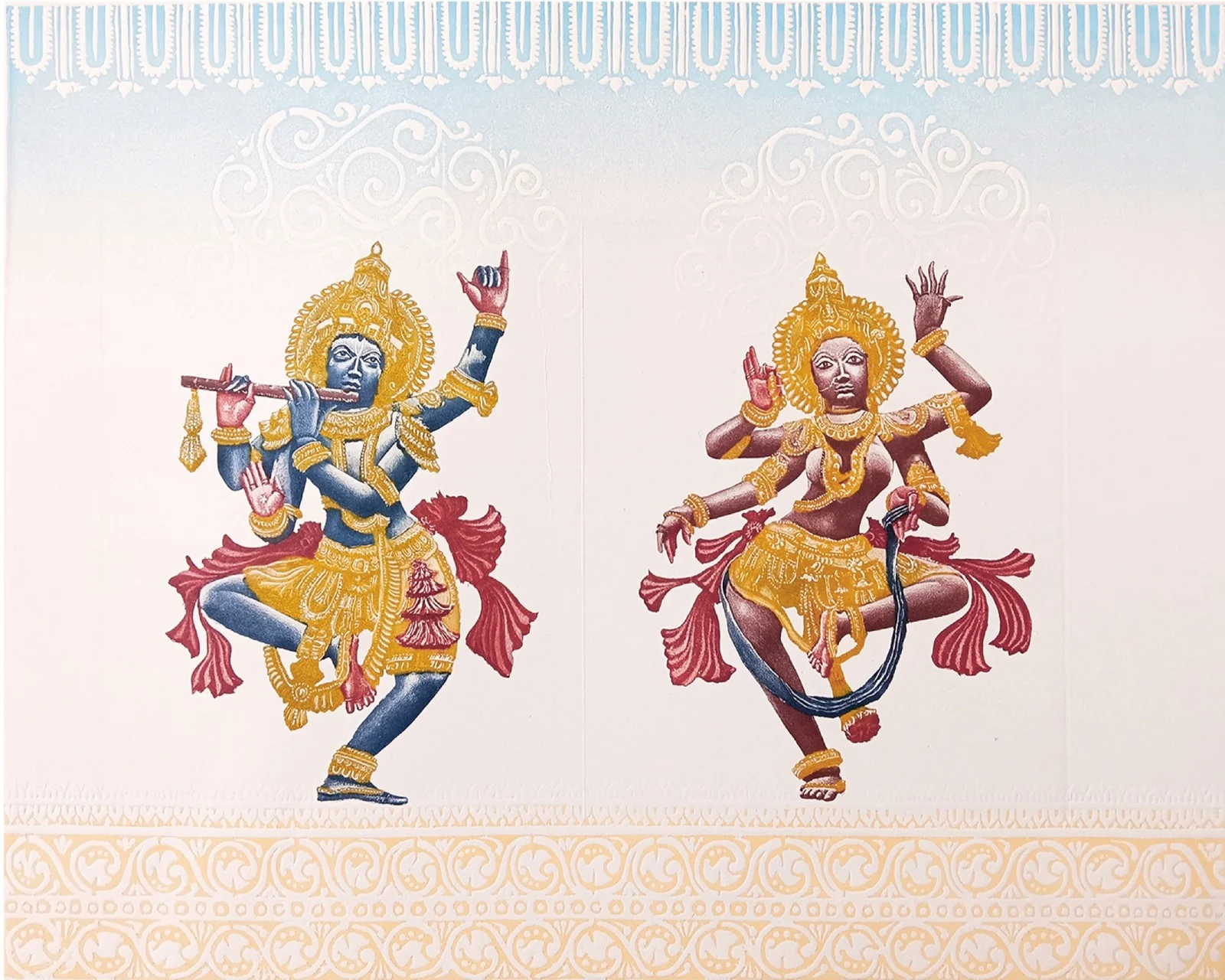
- Gods and goddesses – Kali, Durga, Lakshmi, Krishna, Ganesha and scenes from the epics.
- Social satire – fashionable “babus”, courtesans and domestic dramas, gently mocking the manners of colonial Kolkata.
Why Kalighat matters to modern Indian art
The economy and confidence of the Kalighat line influenced later Indian modernists, most famously Jamini Roy, who looked to Bengal’s folk painters when developing his own simplified style. Kalighat paintings are now held in major museum collections, and contemporary patuas continue to paint in the tradition.
Collecting Kalighat Pattachitra today
- Look at the line. A good Kalighat painting is all about the brush – the outline should feel fluid and alive.
- Notice the subject. Religious images suit prayer and family spaces; satirical and everyday scenes bring personality to living rooms and studies.
- Group them. Because they are often modest in size, several Kalighat works hung together create a striking feature wall.
- Protect the paper. Frame behind glass with an acid-free mount and avoid damp walls during the monsoon.
Kalighat Pattachitra at Anandini Art Gallery
Our Bengal Pattachitra (Kalighat) collection features original hand-painted works as part of our Living Traditions of India. If you enjoy Kalighat’s bold graphic quality, you may also like Gond art. Get in touch to see the collection in Chandigarh.
Frequently asked questions
Kalighat painting, or Kalighat Pattachitra, is a style of painting that developed in the 19th century around the Kalighat Kali temple in Kolkata, known for bold, sweeping outlines and themes ranging from deities to social satire.
They were painted by patuas, traditional scroll painters from rural Bengal who moved to Kolkata and adapted their art for pilgrims and city buyers.
Frame it behind glass with an acid-free mount, keep it out of direct sunlight and away from damp walls. Smaller works look striking hung together as a group.