
A Thangka painting from Ladakh or Tibet is far more than a painting. In the Buddhist traditions of the Himalaya – Tibet, Ladakh, Sikkim, Bhutan and Nepal – it is a sacred image used for meditation, teaching and devotion. Every line, colour and proportion follows centuries-old rules, which is why a well-painted Thangka feels so calm, balanced and complete.
What is a Thangka?
The word is often translated as “something that can be unrolled”. Traditionally, Thangkas are painted on prepared cotton, then mounted in silk brocade so they can be rolled up, carried and hung in monasteries, homes and shrines. They depict Buddhas, bodhisattvas, protective deities, mandalas and the life of the Buddha. You can read more about Thangka on Wikipedia.
Proportion, grids and discipline
Thangka painters learn strict systems of iconometry: precise grids that define the proportions of every figure, from the width of a face to the length of a finger. These rules ensure each deity is recognisable and spiritually correct. Only after mastering the drawing does a painter move on to colour – traditionally mineral and plant pigments – followed by shading, fine outlines and, often, gold detailing. A single Thangka can take weeks or months.
Deities you will often see
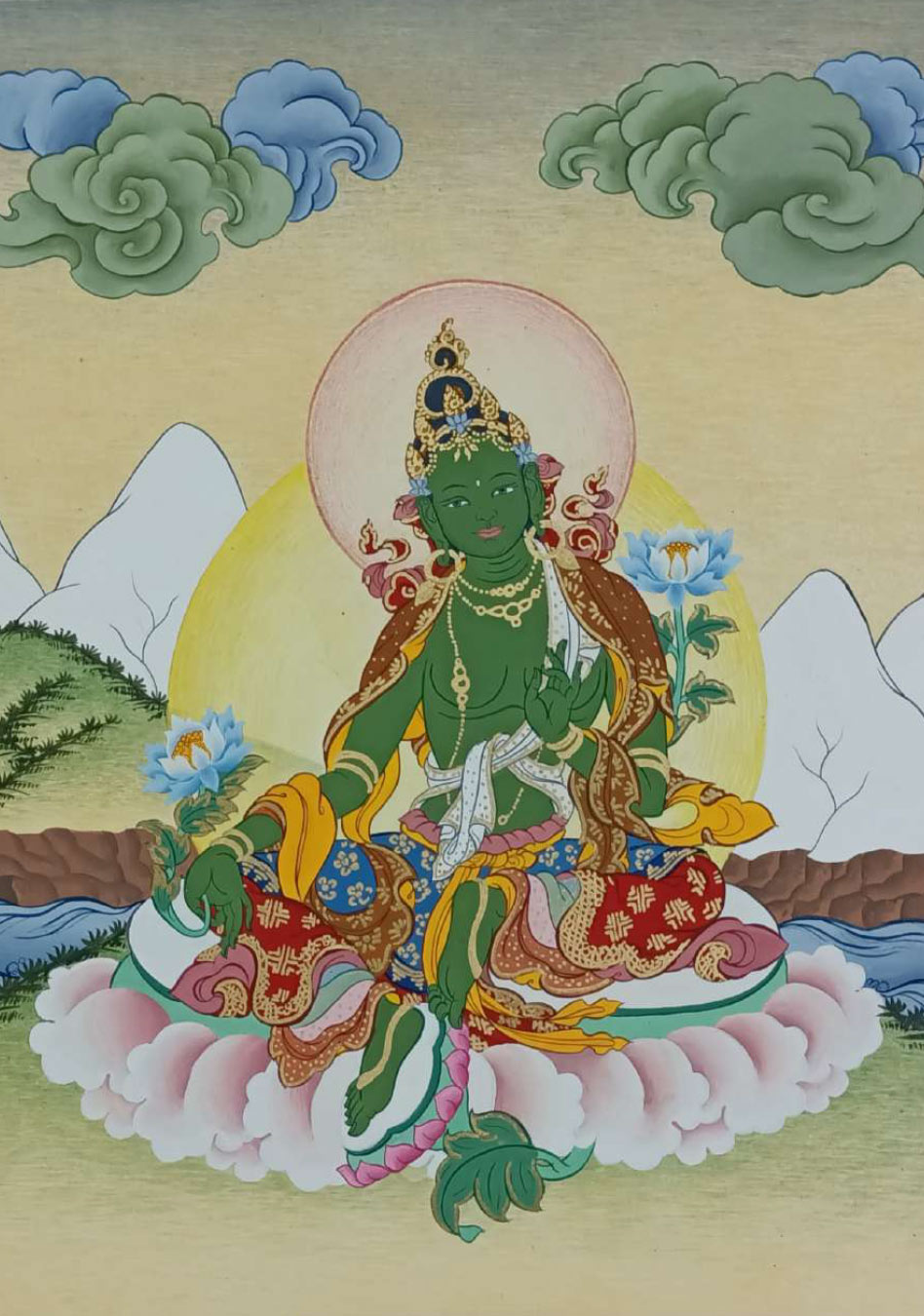
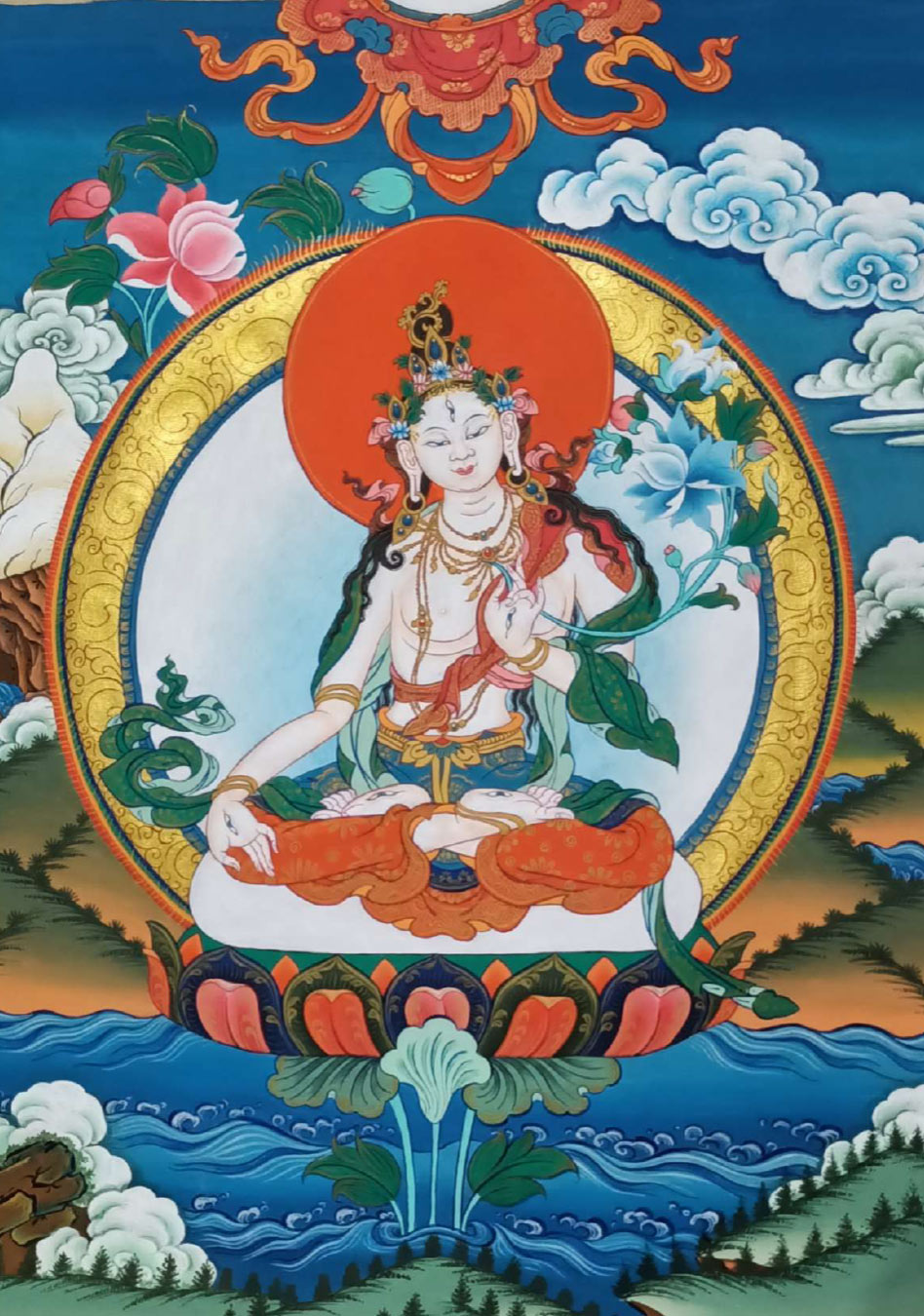
- Tara – a female bodhisattva of compassion. White Tara is associated with long life and healing; Green Tara (Dolma in Tibetan) with swift protection.
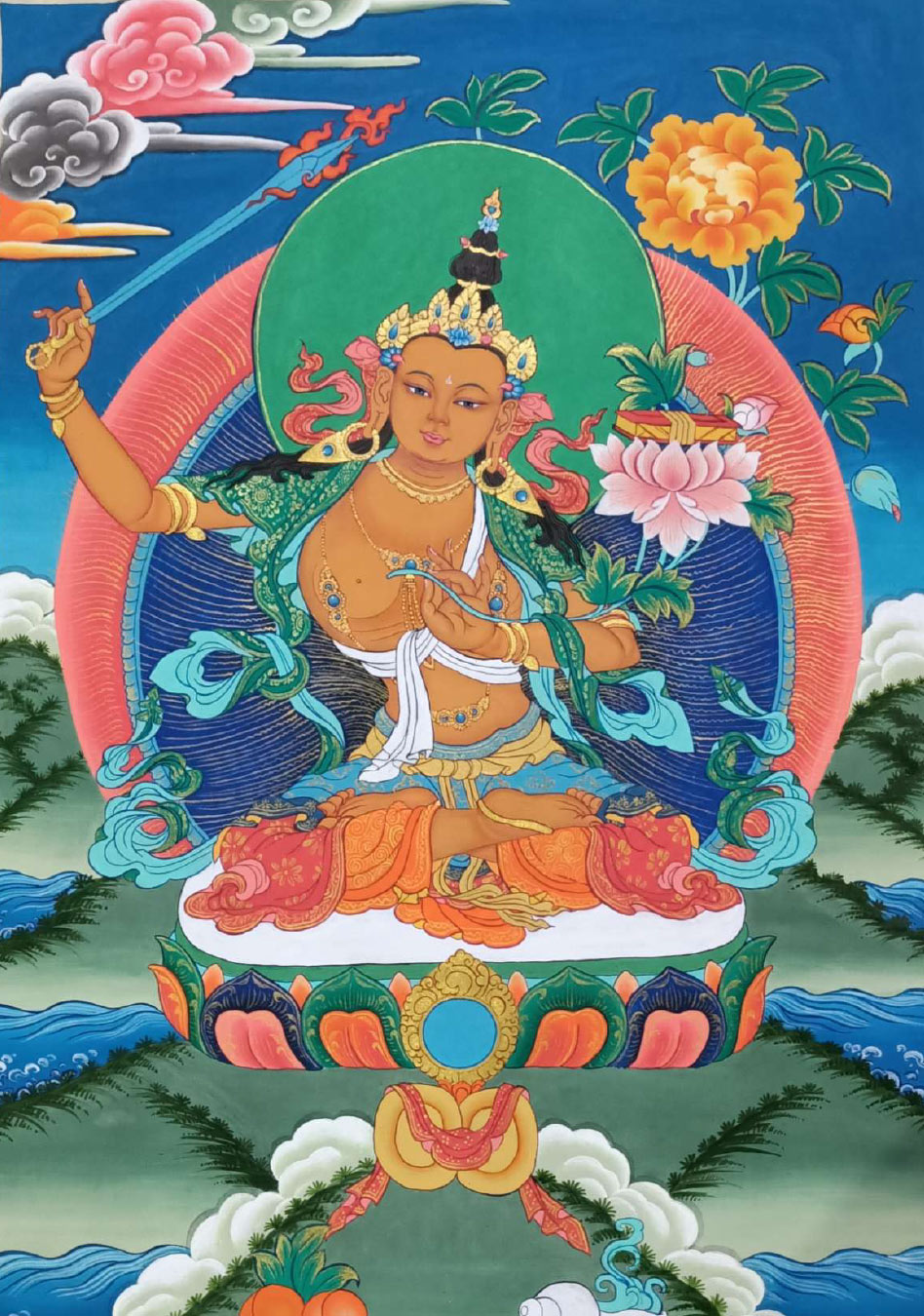
- Manjushri – the bodhisattva of wisdom, shown holding a flaming sword that cuts through ignorance.
- Shakyamuni Buddha – the historical Buddha, usually seated in meditation.
- Mandalas – cosmic diagrams representing an enlightened universe, used as meditation aids.
Thangka painting from Ladakh today: Yangchen Dolker
At Anandini Art Gallery we represent Yangchen Dolker, a Thangka painter originally from Ladakh and now based in Chandigarh, whose practice is rooted in Ladakhi culture and in the foundational principles of proportion, symmetry and spiritual structure that define the art form. Her works in our collection include White Tara, Manjushri and two depictions of Dolma.
How to choose and display a Thangka
- Choose the deity with intention. Many collectors choose a deity whose qualities – compassion, wisdom, protection – are meaningful to them.
- Hang it with respect. Traditionally Thangkas are hung at or above eye level, in a clean, calm space – never on the floor or in a bathroom.
- Protect the pigments. Keep it out of direct sunlight and away from humidity (see our care guide).
- Look at the faces and hands. In a skilled Thangka, these details are crisp, serene and precisely proportioned.
Browse all Thangka paintings at Anandini Art Gallery, or contact us to see them in person.
Frequently asked questions
A Thangka is a sacred Buddhist painting from the Himalayan region, traditionally painted on cotton and mounted in silk, depicting Buddhas, bodhisattvas, deities and mandalas for meditation and devotion.
Thangka painters follow iconometric grids that define the exact proportions of each deity, so that the image is correct, recognisable and suitable for spiritual practice.
White Tara is a bodhisattva of compassion associated with long life, healing and serenity.