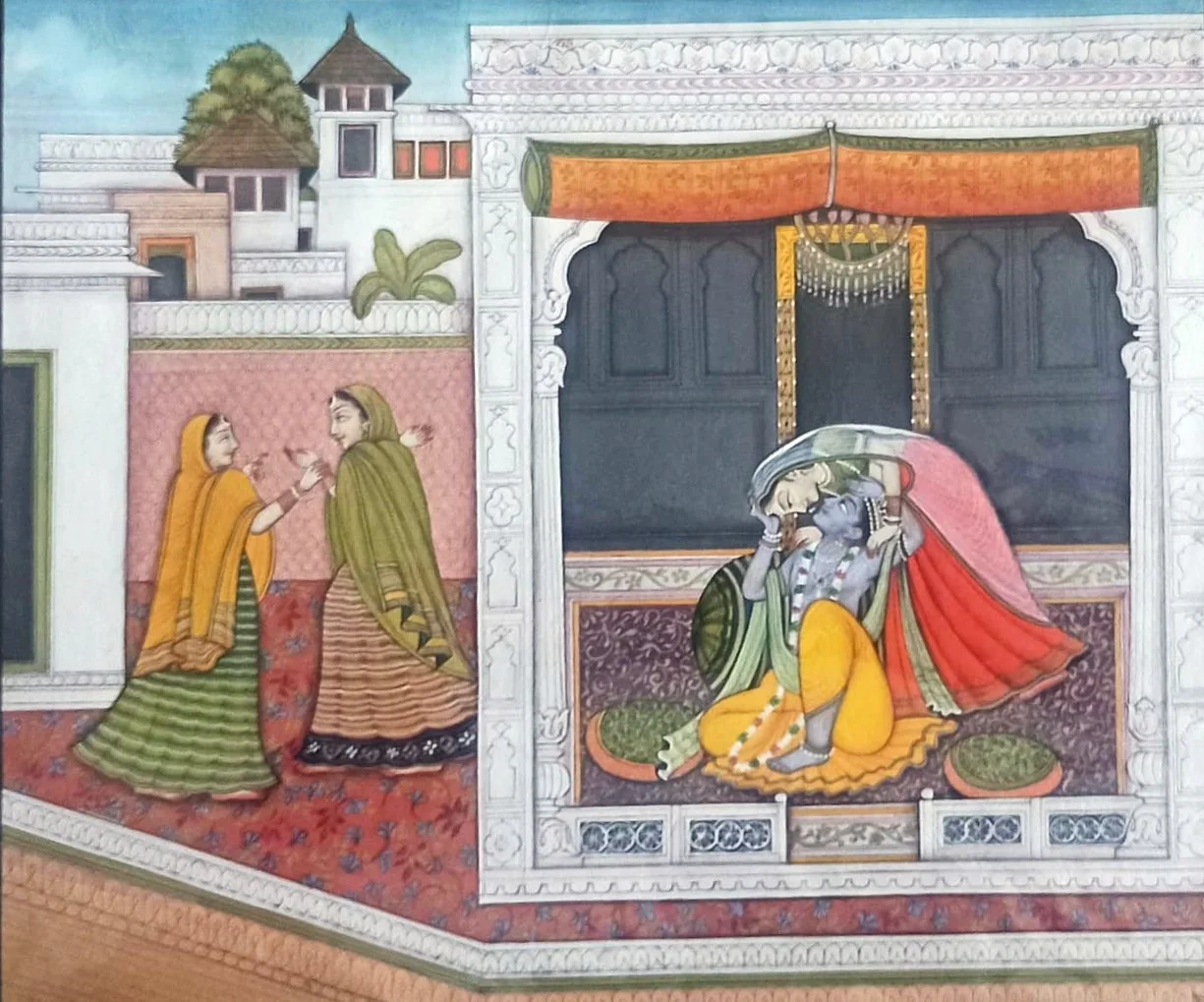

Understanding printmaking starts with one surprise: many people assume that a “print” is a copy. In fine art, the opposite is true. An original print – an etching, a lithograph, a woodcut – is an artwork in its own right, conceived and made by the artist by hand from a plate, stone or block. Printmaking is one of the richest areas of contemporary Indian art, and several artists at Anandini Art Gallery are among its finest practitioners.
Original print vs reproduction
A reproduction (such as a poster or a digital giclée copy of a painting) is a photographic copy of an artwork that already exists. An original print is created through printmaking itself: the artist draws, carves or etches the matrix and prints each impression, usually in a small, limited edition. Each impression is an original work. You can read more about printmaking on Wikipedia.
Understanding printmaking: the main techniques
Relief printing: woodcut and linocut
The artist carves away the parts of a wooden block (or linoleum) that should stay white. Ink is rolled onto the raised surface and pressed onto paper. Woodcuts have bold contrasts and visible wood grain. See Prerna Puri’s woodcut Triadic Love and Gurleen Kaur’s Mela.
Intaglio: etching, aquatint and engraving
In intaglio, the image is cut or bitten into a metal plate. For an etching, the artist draws through a protective ground with a needle and the plate is bathed in acid, which bites the exposed lines. Aquatint creates tonal areas, and engraving cuts lines directly into the metal. Ink is pushed into the grooves, the surface wiped clean, and paper is pressed into the plate under great pressure – often leaving a visible plate mark.
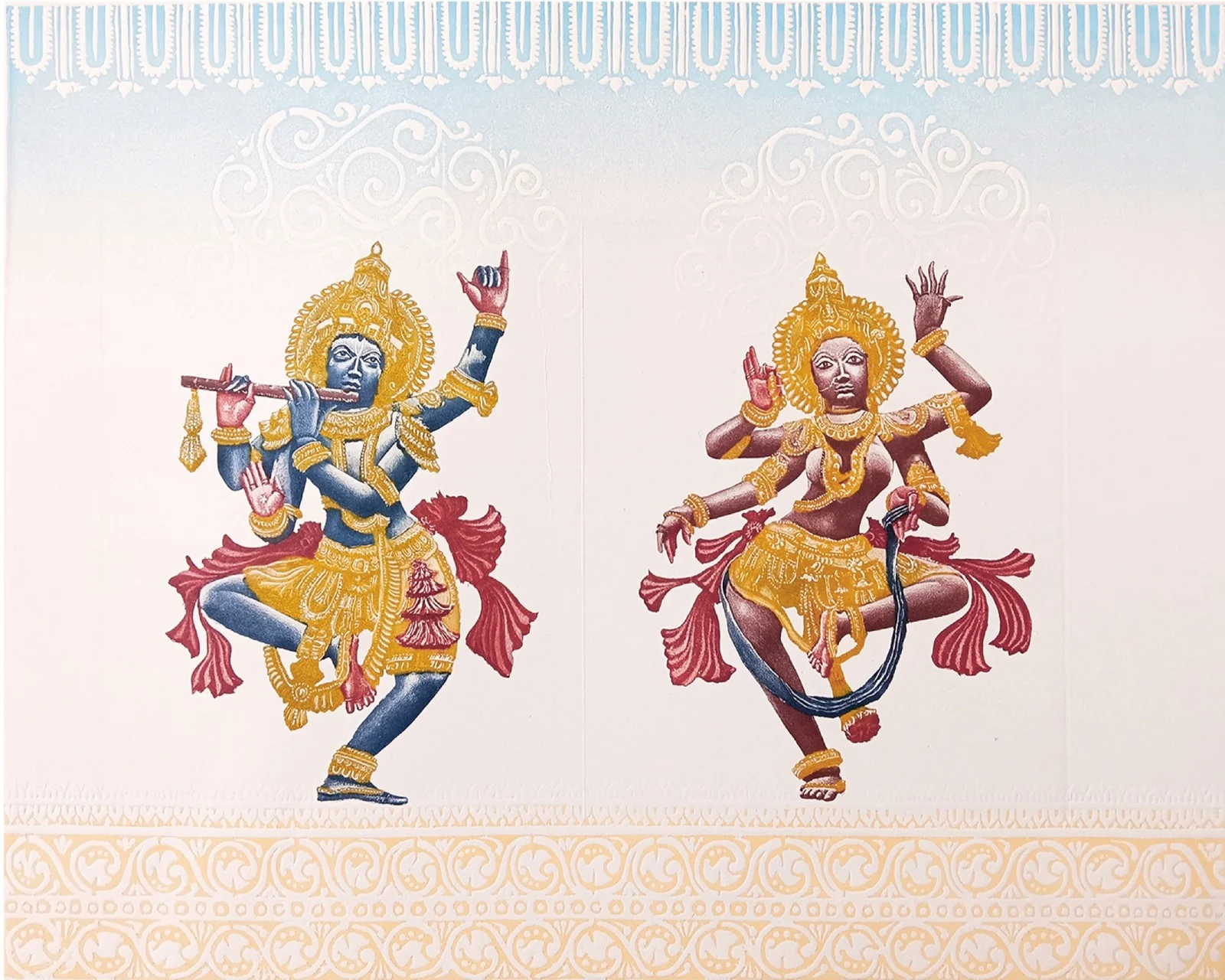
Planographic: lithography
Lithography relies on the fact that oil and water do not mix. The artist draws on a flat stone or plate with a greasy medium; the surface is dampened, and oily ink sticks only to the drawn areas. Lithographs can capture the softness of a crayon drawing. Master printmaker Ajit Seal’s Bond is a plate lithograph, and his Mimic series uses photo-lithography.
How to read an edition
- Edition number – written as a fraction in pencil, e.g. 3/10: this is the third impression of an edition of ten.
- A/P (Artist’s Proof) – a small number of impressions kept by the artist outside the main edition.
- Signature – original prints are normally signed by hand in pencil, below the image.
- Title and date – often written alongside the signature.
Why collect original prints?
Prints offer the chance to own an original work by an established artist at a more accessible price than a unique painting, while still carrying the artist’s hand and process. They are also wonderfully varied: from the crisp lines of zinc-plate etchings by Pritpal Singh to the layered relief prints of Ajay Kumar Tanwar.
Explore printmaking in our Contemporary Art collection, read about the Santiniketan tradition that shaped many of these artists, or contact us to view prints in Chandigarh.
Frequently asked questions
A fine-art print such as an etching, lithograph or woodcut is an original artwork when it is made by the artist through a printmaking process. A reproduction, by contrast, is a photographic copy of an existing artwork.
It means the print is the third impression from an edition of ten. The number is usually written in pencil next to the artist’s signature.
Etching is an intaglio technique where lines are bitten into a metal plate with acid, while lithography is a planographic technique based on the repulsion of oil and water on a flat stone or plate.