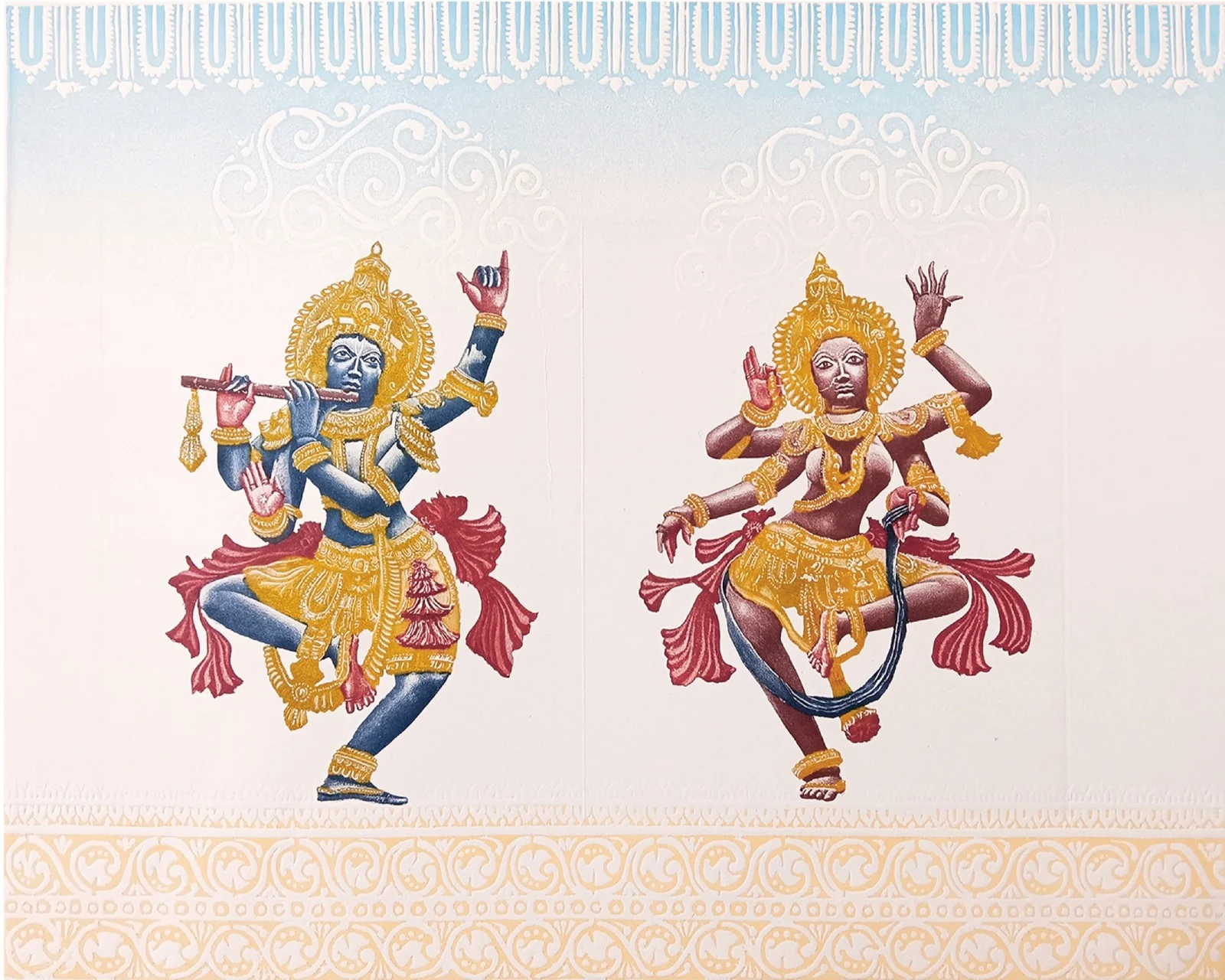

Small enough to hold in your hands, yet detailed enough to study for hours, Indian miniature paintings are among the greatest achievements of Indian art. Between the seventeenth and nineteenth centuries, painters of the Pahadi schools working for royal courts in the Himalayan foothills and in Rajasthan created distinct regional styles – or “schools” – that artists continue to practise today.
How miniatures are made
Traditional miniatures are painted on wasli, sheets of handmade paper pasted together and burnished smooth. Artists use very fine brushes – traditionally made from squirrel hair – and pigments ground from minerals and plants, often highlighted with real gold. Colour is built up in thin layers and repeatedly burnished, which gives miniatures their jewel-like glow. Some of the works in our collection are painted in natural colours and 24 carat gold on wasli paper. You can read more about Pahari painting on Wikipedia.
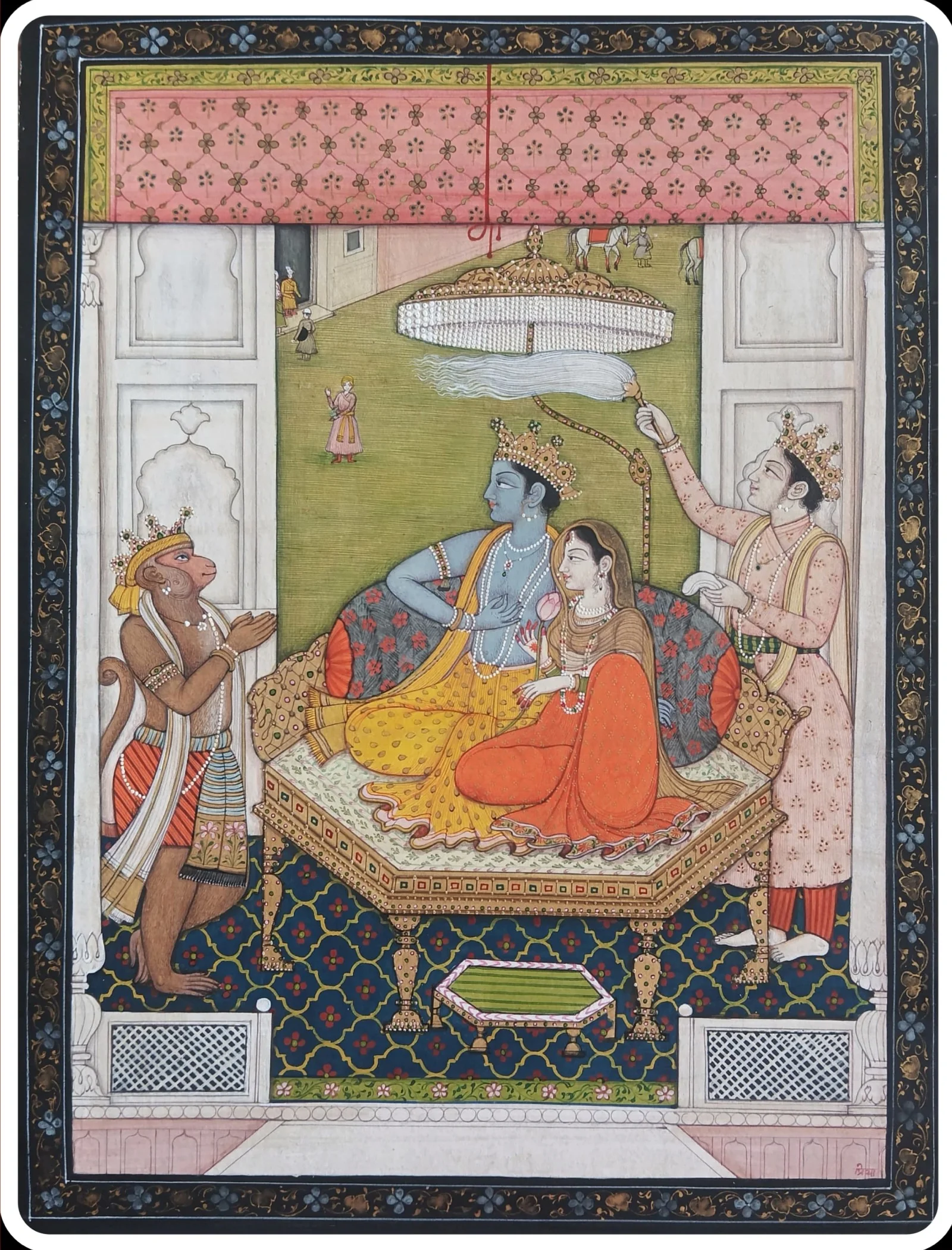
Pahadi miniature painting schools of the hills
“Pahadi” means “of the hills”. Pahadi painting developed in small hill kingdoms in present-day Himachal Pradesh, Jammu and Uttarakhand.
- Basohli – the boldest of the hill styles: intense reds, yellows and greens, strong profiles with large eyes, and sometimes fragments of beetle wing used to imitate emeralds.
- Guler – more delicate and naturalistic, associated with painter families such as that of Pandit Seu and his son Nainsukh; it laid the foundation for the Kangra style.
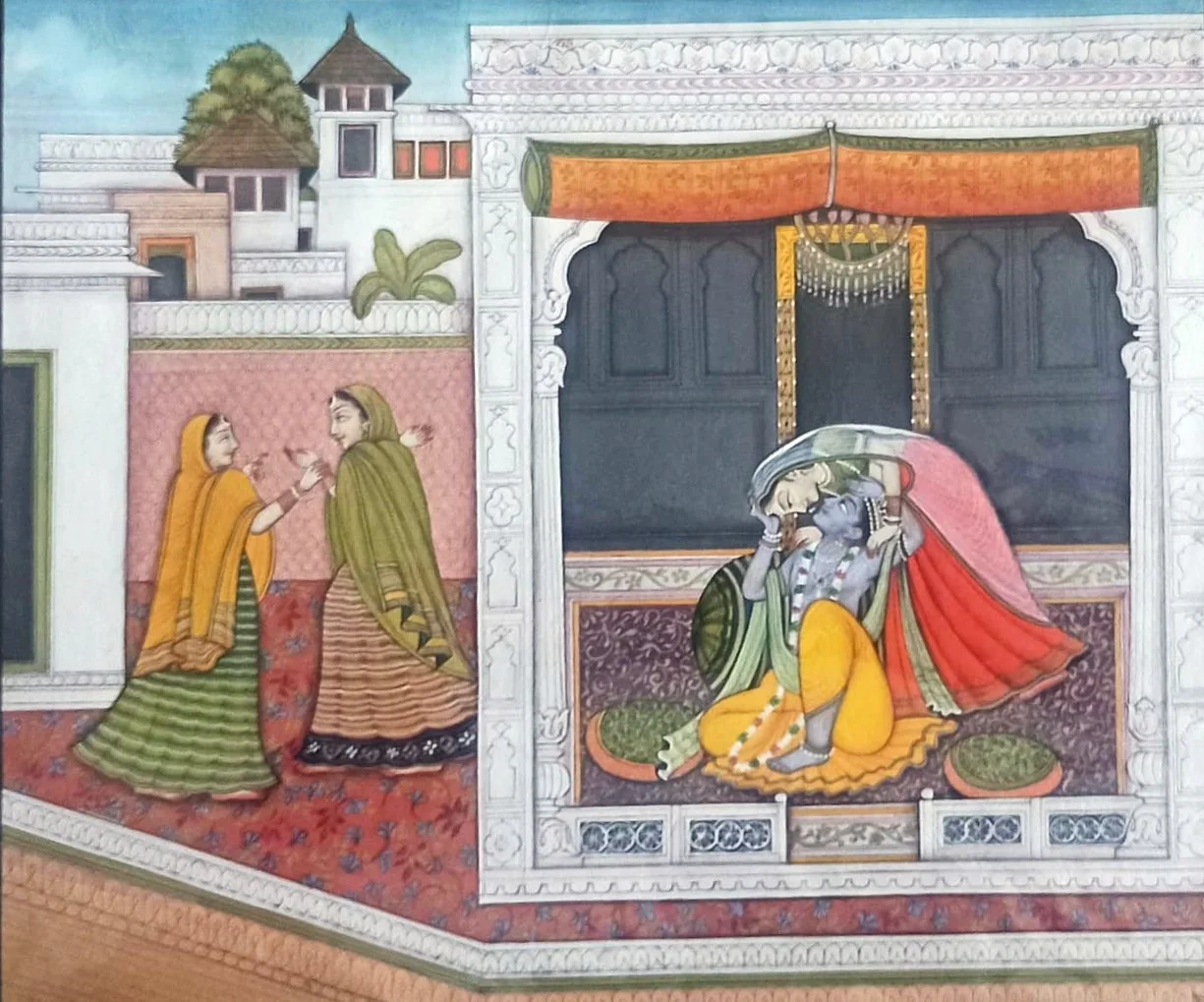
- Kangra – lyrical and refined, famous for graceful women, soft colours and romantic scenes from the Gita Govinda and the life of Krishna.
- Chamba, Mandi and Nurpur – regional variations, from the robust figures of Mandi to the refined compositions of Chamba.
- Garhwal – a hill school of present-day Uttarakhand, influenced by Kangra painting.
The Rajasthani schools
Rajasthani miniatures developed in the courts of Rajasthan – Mewar, Bundi, Kota, Marwar, Jaipur and Kishangarh, among others. Compared with Pahadi work they are often more vibrant and stylised. The Kishangarh school is famous for elongated faces with arched eyebrows and lotus-shaped eyes, epitomised by the celebrated Bani Thani attributed to Nihal Chand.
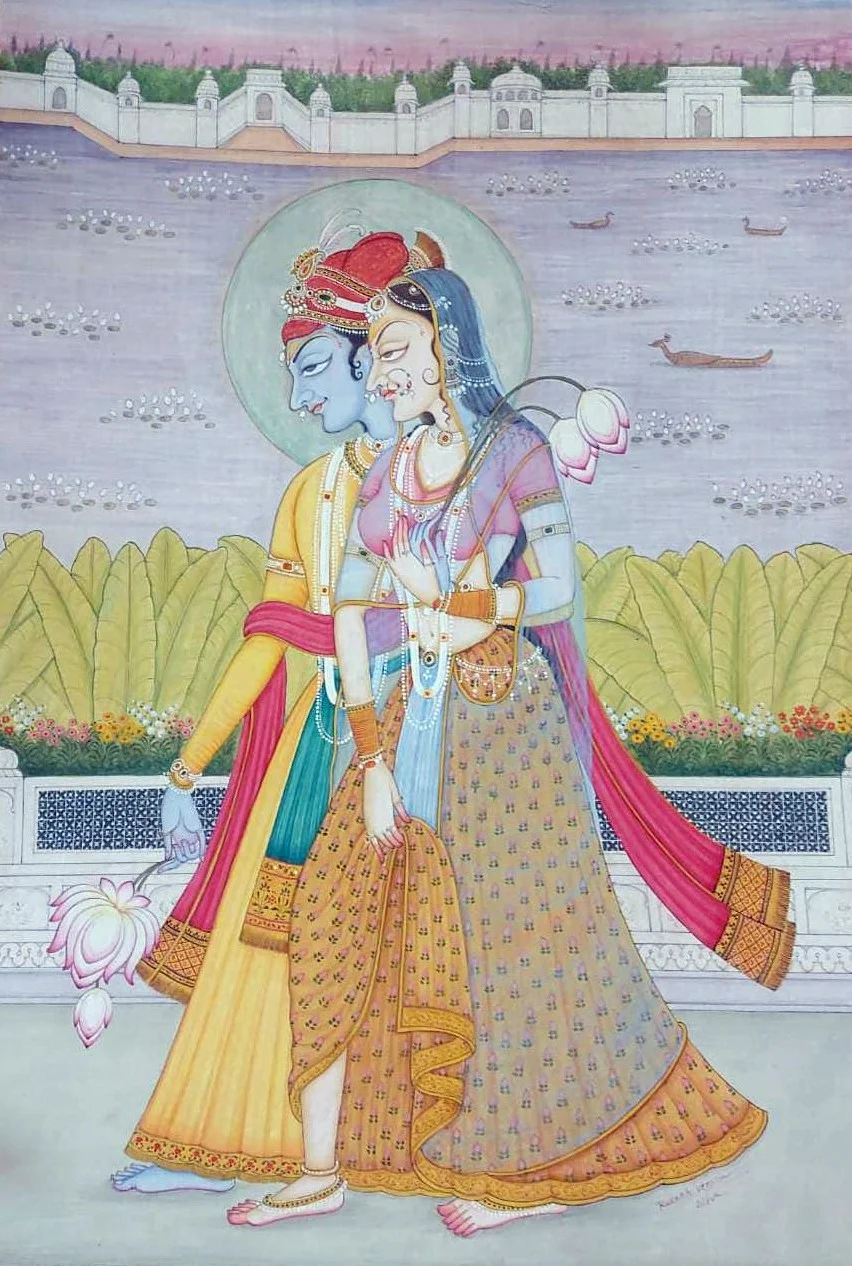
Pahadi vs Rajasthani: a quick comparison
- Colour: Pahadi (especially Kangra) favours soft, cool tones; Rajasthani tends towards rich, saturated colour.
- Line: Pahadi lines are fluid and lyrical; Rajasthani figures are often more stylised and decorative.
- Landscape: Pahadi painters love rolling hills, rivers and trees; many Rajasthani works focus on architecture, courts and processions.
Buying an original miniature
Use a magnifying glass. Genuine miniatures show individual brush strokes, layered colour and – where gold is used – a raised, slightly textured shine. Printed reproductions show flat colour and dot patterns. Ask about the paper, the pigments and the school the artist is working in. Our article on spotting an original painting covers this in more detail.
Miniature paintings at Anandini Art Gallery
Explore original Pahadi miniature paintings in the Basohli, Guler, Kangra, Chamba, Mandi, Noorpur and Garhwal styles, and our Rajasthani miniature in the Kishangarh style – all part of our Living Traditions collection. Contact us to view them in Chandigarh.
Frequently asked questions
Pahadi miniatures come from the Himalayan hill kingdoms and are known for lyrical lines and soft colours, while Rajasthani miniatures come from the courts of Rajasthan and are typically more vibrant and stylised.
Wasli is handmade paper made by pasting several layers together and burnishing them smooth. It is the traditional surface for Indian miniature painting.
The Kangra school is the best known, famous for its graceful figures, soft colours and romantic scenes from the life of Krishna and the Gita Govinda.