
Few places have shaped modern Indian art as profoundly as Santiniketan, the small town in West Bengal’s Birbhum district where Rabindranath Tagore founded Visva-Bharati. Its art school, Kala Bhavana, established in 1919, has nurtured generations of painters, sculptors and printmakers – and its influence runs through the collection at Anandini Art Gallery.
A different idea of an art school
Tagore imagined education rooted in nature, in Indian traditions and in open exchange with the wider world. Under teachers such as Nandalal Bose, Benode Behari Mukherjee and Ramkinkar Baij, Kala Bhavana encouraged students to draw from life and landscape, to learn from folk and classical Indian art, and to experiment freely with materials – from murals and sculpture to printmaking. You can read more about Kala Bhavana on Wikipedia.
Santiniketan art and printmaking at Kala Bhavana
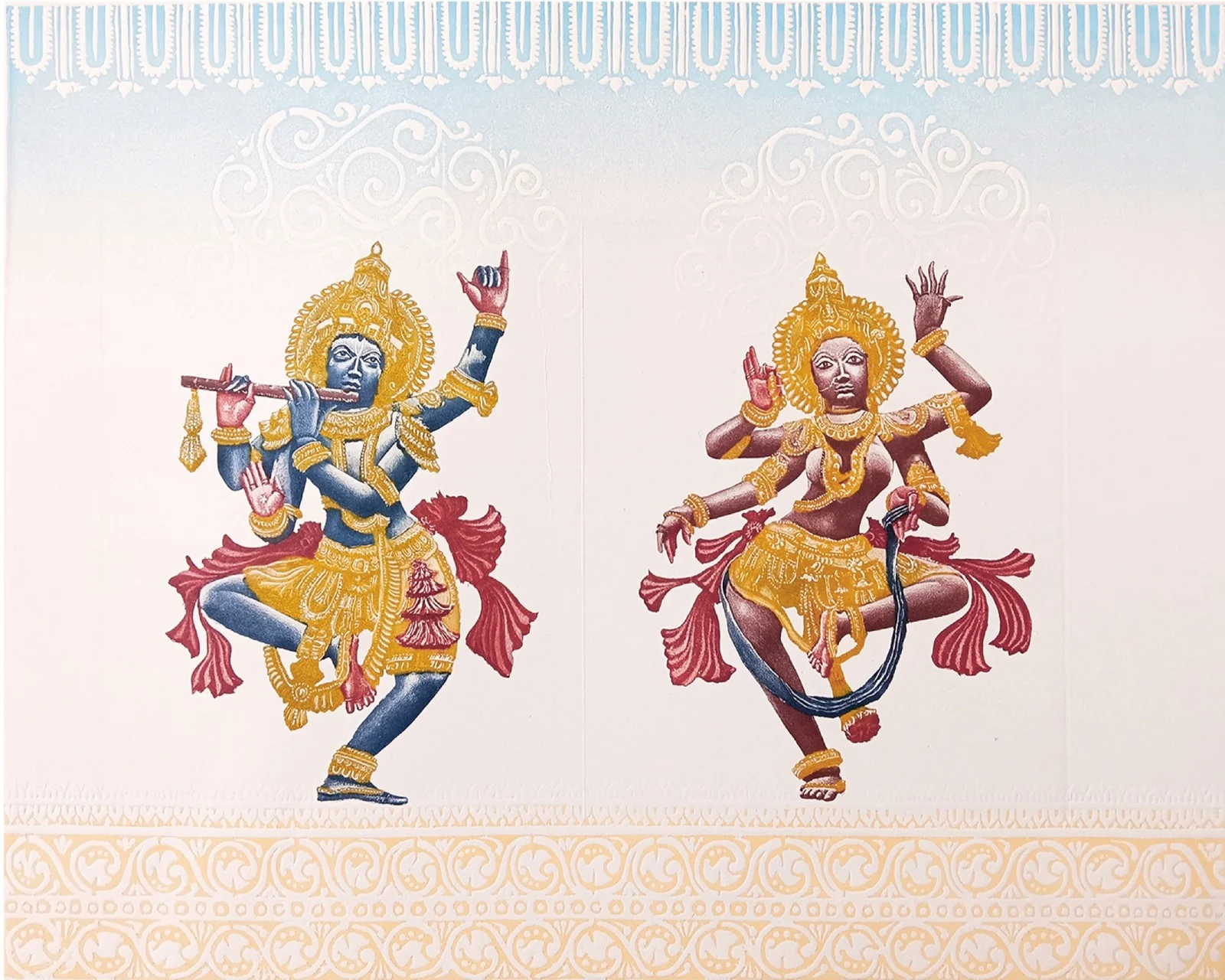
Santiniketan became an important centre for printmaking in India, training artists in etching, lithography, woodcut and engraving. This legacy is visible in the work of master printmaker Ajit Seal, an alumnus and later professor at Kala Bhavana, whose lithographs, intaglios and wood engravings bridge the narrative heritage of north-east India and the meditative discipline of the print studio. Learn more in our guide to printmaking techniques.
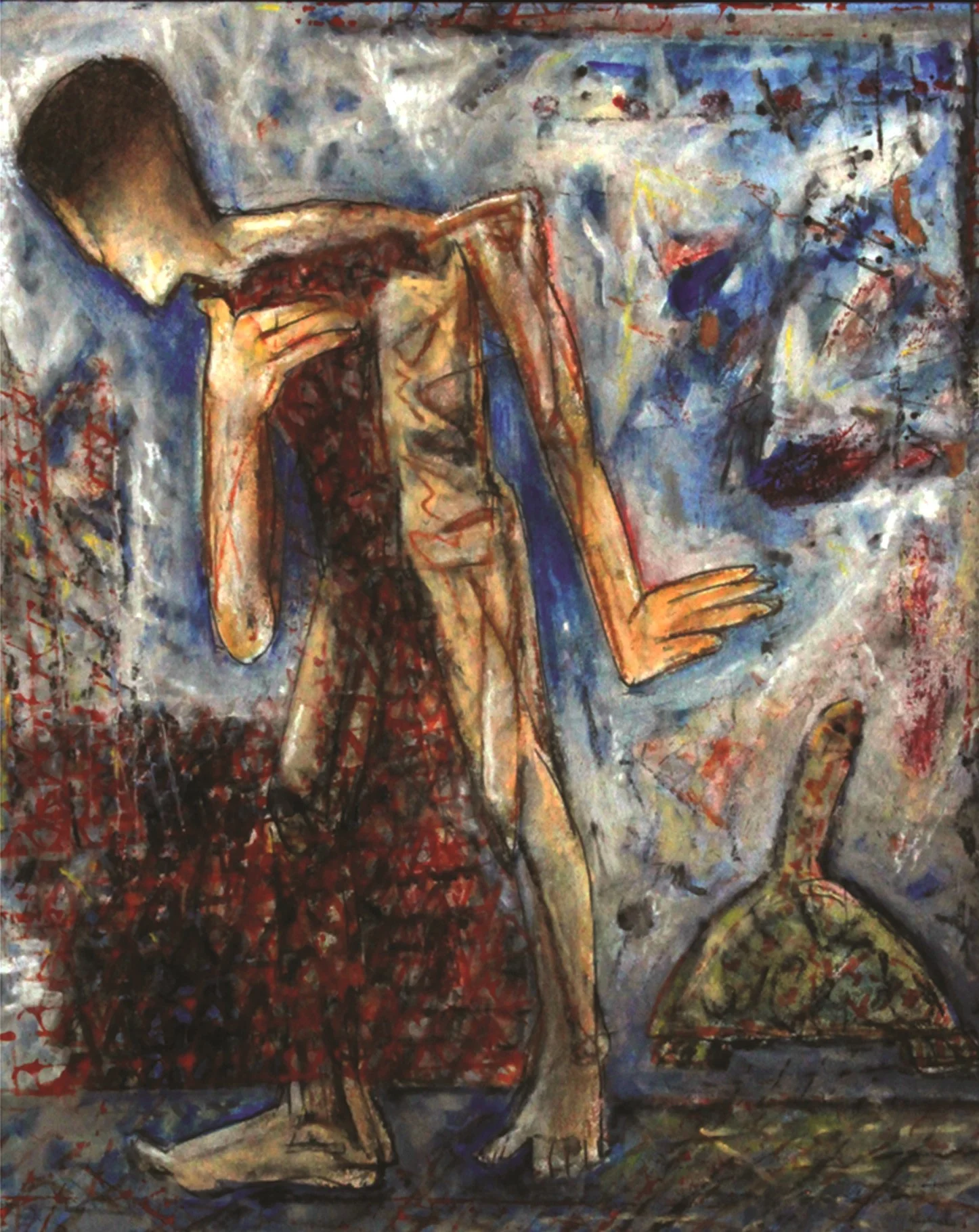
Santiniketan artists at Anandini Art Gallery
- Ajit Seal – master printmaker, painter and educator; alumnus and former professor at Kala Bhavana, Visva-Bharati.
- Sanatan Saha – paints the shifting landscapes, village life and urban change of the Birbhum region around Santiniketan.
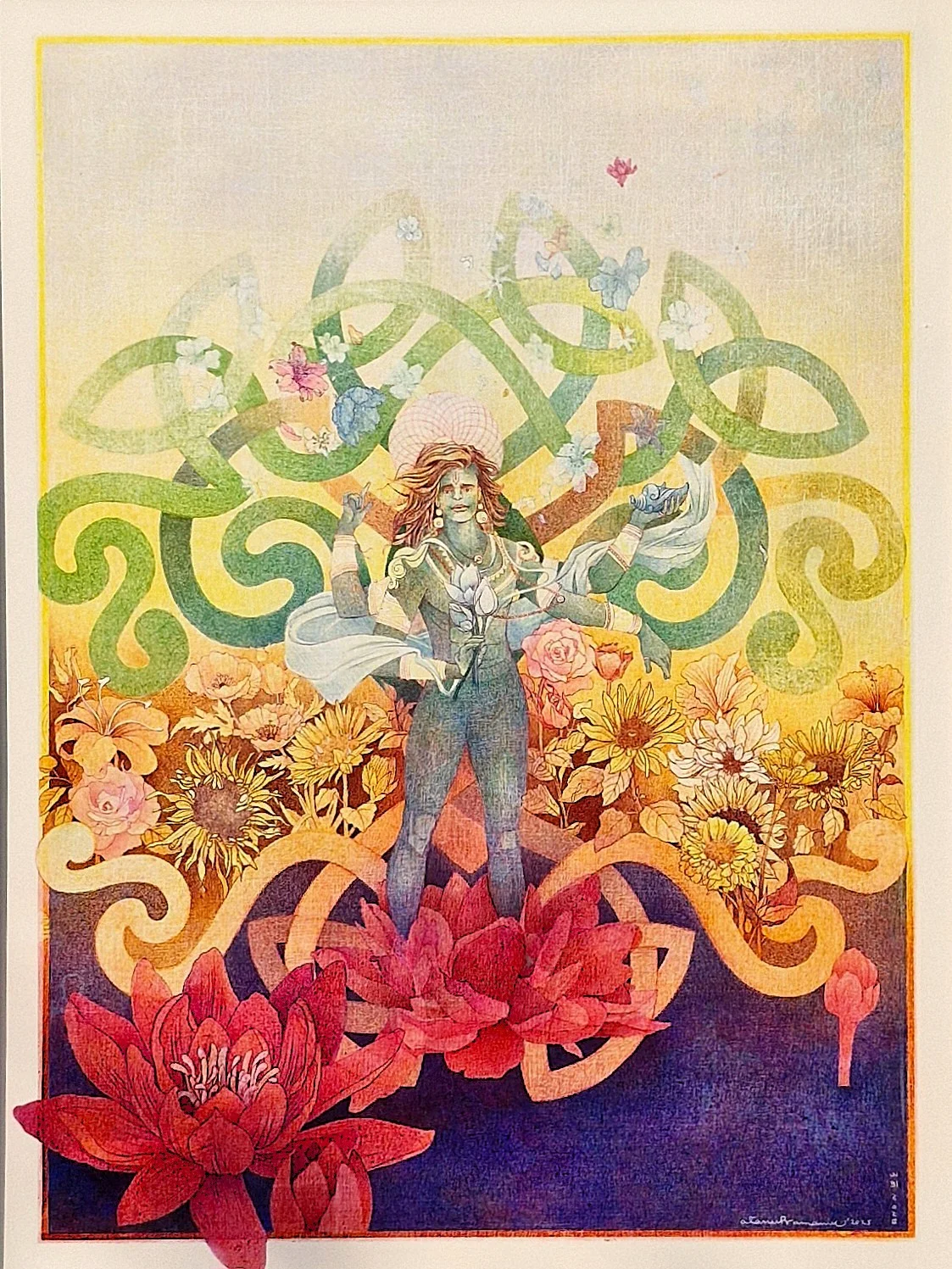
- Atanu Parmanik – a Santiniketan-based artist whose vivid paintings explore the unconscious mind and contemporary social life.
- Pritpal Singh – a Visva-Bharati graduate and printmaker in etching and lithography, now teaching at the Government College of Art, Chandigarh.
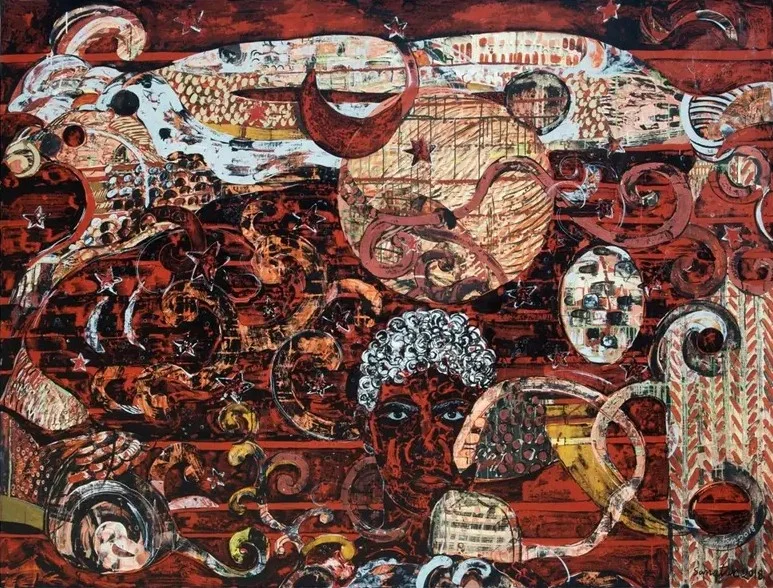
A bridge between Santiniketan and Chandigarh
Anandini Art Gallery’s chief mentor, Hardeep Singh, also holds a Master of Fine Arts (Painting) from Visva-Bharati University, Santiniketan. That connection informs the gallery’s approach: a respect for India’s living traditions alongside a commitment to serious contemporary practice – which is why our Living Traditions and Contemporary Art collections sit side by side.
To see works by Santiniketan-connected artists in person, visit us in Sector 16, Chandigarh.
Frequently asked questions
Kala Bhavana is the art school of Visva-Bharati University at Santiniketan, West Bengal, established in 1919 under Rabindranath Tagore’s vision. It is one of India’s most influential art institutions.
Ajit Seal, Sanatan Saha, Atanu Parmanik and Pritpal Singh are all connected to Santiniketan, and the gallery’s chief mentor Hardeep Singh studied at Visva-Bharati.
Kala Bhavana trained generations of artists in etching, lithography, woodcut and engraving, making Santiniketan one of the key centres of printmaking in India.